The sanctuary of Baalbek was one of the most famed sites of the ancient world and the well-preserved ruins are still capable of inspiring awe and wonder to this day. Roman emperors would make pilgrimage to the largest of Rome’s temples, situated not in the Eternal City, but in a remote valley sandwiched between the Lebanon and ante-Lebanon mountain ranges. Though Baalbek is still a major attraction, for decades its proximity to the Syrian border and a nearby Hezbollah training camp have made it largely inaccessible to all but the hardiest of travellers. Now, as tourism returns to the Lebanon, its mysteries are again being slowly revealed.
The Propylaea, author’s photo
Nobody would deny that the Romans were master builders, the engineers par excellence of the ancient world. It took the Julio-Claudian emperors over 200 years to build the sanctuary that consists of temples dedicated to the Roman triad Jupiter, Bacchus and Venus, plus two massive courts, sacrificial altars and basins for ritual cleansing. The vast scale of the complex, the intricacy of the decoration and the sheer height of the six remaining Corinthian columns of the Temple of Jupiter, the largest in the Roman world, cannot fail to impress. Still, the enigma of Baalbek lies not so much in the wonder of the temples, but in the presence of three gigantic stones comprising part of the wall that surrounds them.
The Trilithon, photo public domain
Approximately 64 feet long, 14 feet high and 12 feet the three stones embedded in the north end of a U-shaped megalithic wall surrounding the Temple of Jupiter are collectively known as the Trilithon. They have been laid with such a precision that ‘even a needle would not fit in between them,’ yet each stone weighs in excess of 800 tonnes, weight that even modern cranes would struggle to move[1]. So, who put them there, how did they do it and what purpose did they serve?
The theories are many and varied. Though the Romans have left no written record of how the Trilithon was moved and why, the most standard line is that it was them who emplaced them, intending the U shaped wall to form part of a podium which presumably was never completed, which in turn incorporated the remains of an even earlier podium[2]. Another theory is that the Romans built the megalithic wall as a restraining wall to stop soil erosion and prevent movement on the vast temple complex [3]. Other researchers doubt that the Romans had the technology to move the massive blocks from the nearby quarry and attribute the building of the wall to an Elder culture who had highly developed building skills learnt before the Great Flood, and who could have also built another Cyclopean structures around the globe.[4] Other theories credit the construction and engineering of the Trilithon wall to giants, jinn or extra-terrestrials who used magnets and sound technology to move the stones.[5]
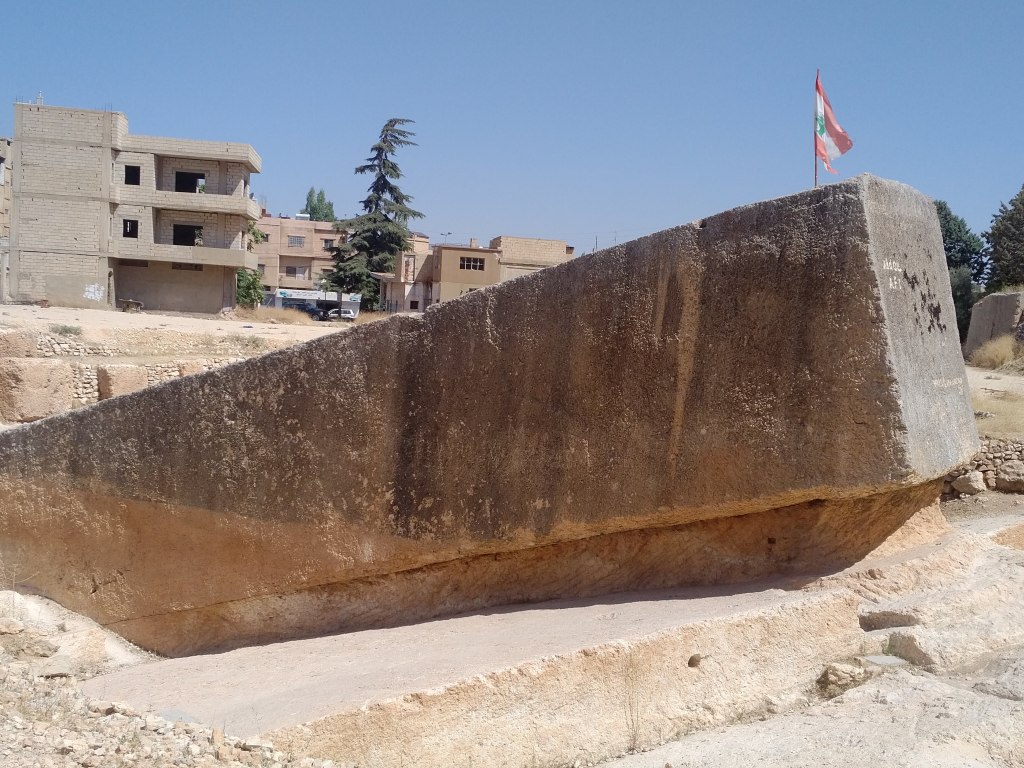
‘The Stone of the Pregnant Woman in the quarry near Baalbek, author’s photo
Many researchers more qualified than me have pondered deeply about the logistics of moving and emplacing such massive stones, but surely that the Romans possessed the know-how to move gigantic blocks and emplace them is not in doubt, as the massive columns in rest of the sanctuary testify. And they could also have simply built the megalithic wall as a retaining wall, practical as they were. But I am equally comfortable with the notion that an earlier culture could have built the wall too, and that massive structures in Egypt and South America show levels of engineering capabilities that equalled, even surpassed, that of the Romans. New and intriguing structures from prehistory are coming to light all the time (e.g. Gobekli Tepe in Turkey) and gradually we are able to flesh out in more detail the mysteries of our past. But for me, after the visiting the site, the enigma of Baalbek changed from how and by whom, to why and why here?
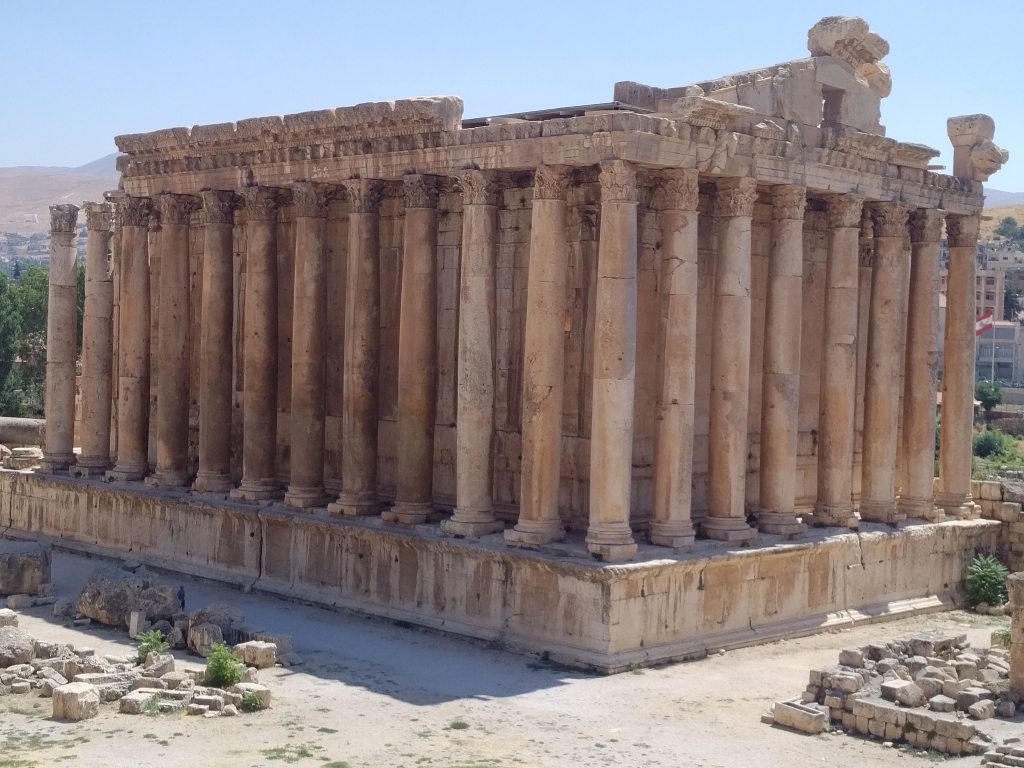
Temple of Bacchus, author’s photo
So, who was here before the Romans? Everyone would agree that Baalbek was considered sacred long before they arrived. Named Heliopolis by the conquering Alexander, the Greeks equated it with the Egyptian City of the Sun, a place of great antiquity by this time. The Canaanites had been present in the area for centuries and used the hill at Baalbek as the centre of one of their sanctuaries. And the Phoenicians, an off shoot of the Canaanites, also considered the site to be sacred and built temples to Baal, Astarte and Adon(is), here. Indeed, the altars of the Roman Great Court were built over the exact summit of the hill used as one of the Canaanite ‘high places’ and care taken to raise the platform so it was the same height. Archaeological evidence has shown almost continual occupation of the tell over the past 9,000 years and evidence of occupation during Paloelithic times has also been found.[6] But why here?
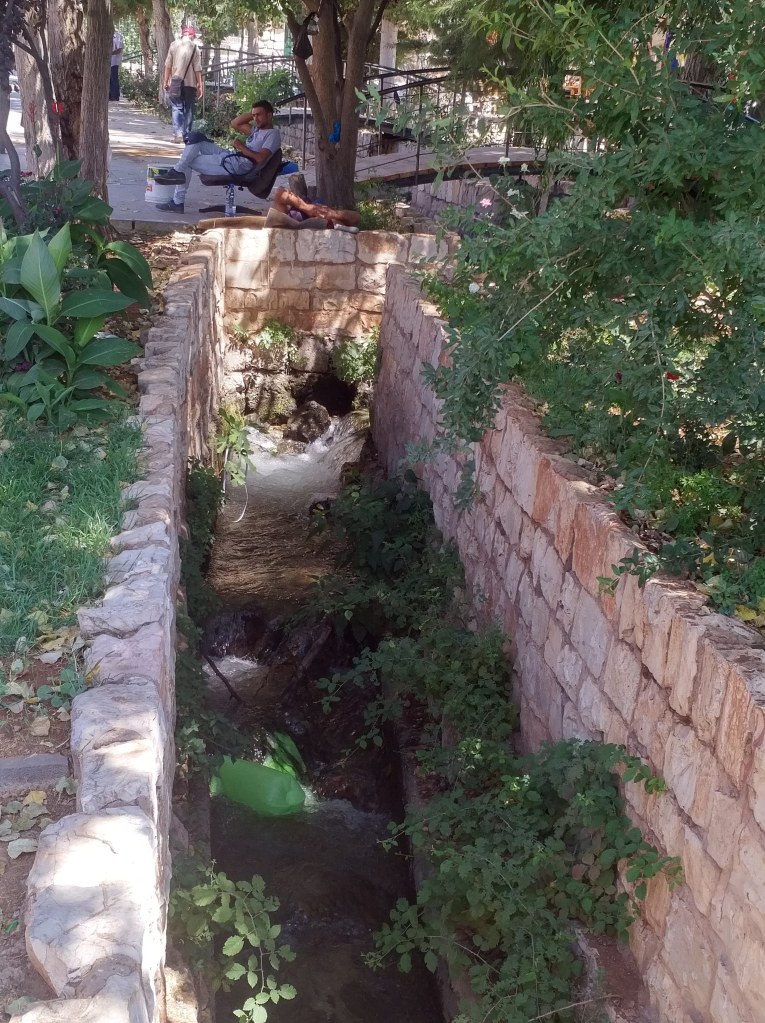
Spring at Baalbek, author’s photo
Next we need to look more carefully at Baalbek’s location in the Beqaa Valley and dig deeper into the local geology. Located in the centre of the cradle of civilisation, the NE Beqaa was a cross over point on trade routes from Tyre to Palmyra in the Syrian desert, or from Damascus to Beirut, bringing a constant flow of people and ideas to this area that was known for its fertile soil. It is located between two mountain ranges, and close to the source of two rivers, the Litani and the Orontes, was deemed highly auspicious by the ancients, and one of the possible locations for the abode of El in the Ugaritic Baal Cycle.[7] Finally, Baalbek is also near a well now called Ras al Ain (‘head of the source’), which in ancient times was associated with the dragon Typhon. [8]
Dragons are usually associated with very powerful Earth energies, and this is an apt description of the Beqaa Valley. Situated at the top of the Great Rift, the valley is in close proximity to (indeed was pushed up by) a long fault line that runs through the Lebanese mountain range bringing frequent earthquakes to the region as the converging African, Eurasion and Arabian microplates twist in opposite directions. The power of nature in this region is literally awesome and must have inspired wonder, and not a small measure of fear, in our ancestors. In addition, the natural springs fed by meltwater runoff from the ante Lebanon mountain range frequently overflow, bringing flooding as well as earthquakes to the Beqaa.
As a site of potent Earth and water energy, Baalbek was also
an oracular site of great antiquity. The Romans took over this cult wholesale
and used the Temple of Jupiter as an oracle, famously consulted by the Emperor
Trajan on two occasions, who asked if he would be victorious against the
Parthians. It was also a site of cosmic importance, for there are reports from
travellers that the Canaanites had a temple housing the sacred ‘betyl’ or
meteorite stones that ‘were endowed with life’ and probably used for oracular purposes.
[9]
Thus as a place of great dragon and water power, as a sacred link between
heaven and Earth, Baalbek was clearly a sacred site par excellence.
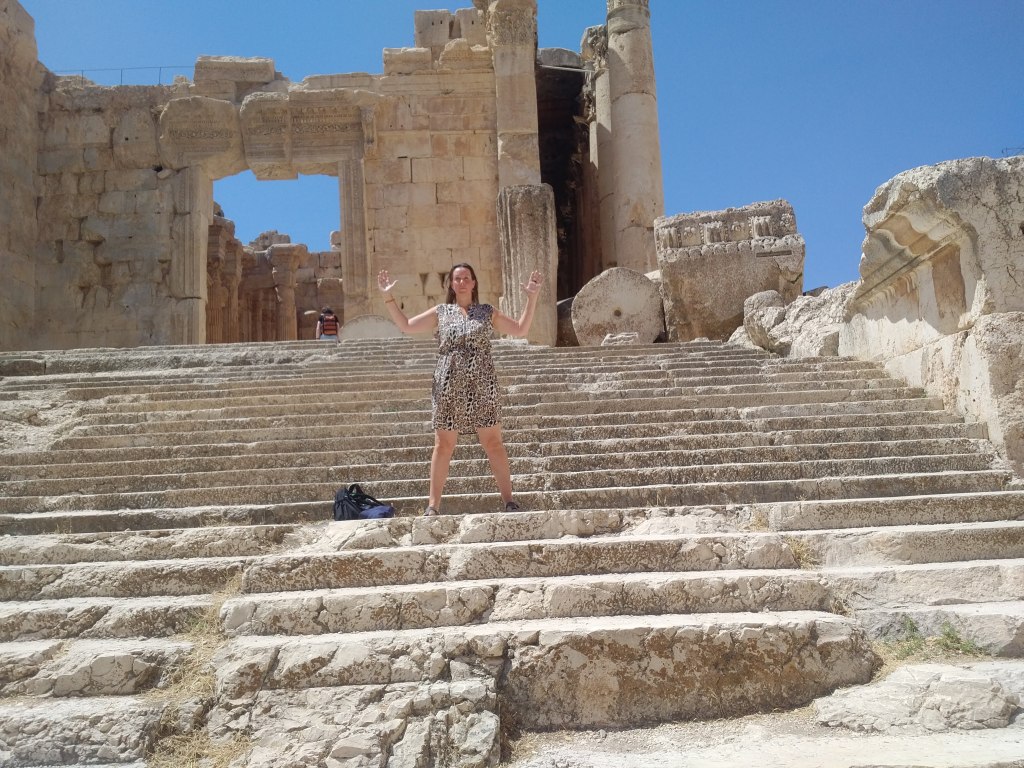
Entrance to the Temple of Bacchus, author’s photo
It is well attested that the natural calamities that befell the people of the Bronze Age resulted in a shift in human focus from living according to the principles of nature, to attempting to dominate. My sense is that the megalithic wall, and massive Trilithon stones, were emplaced for this reason, to try and control the vast and awesome forces at play in the Valley. Whether the Romans built the megalithic wall or not, they certainly built to impress and dominate, harnessing the power of the potent sun god (Jupiter) and the wild god of bacchanalia (Bacchus) to this end. To build such an imposing monument on this site of great Earth energy was clearly deliberate.
Over the past two thousand years, many more earthquakes and flood have ravished the land, and waves of conquerors have passed through, leaving their own mark. In more recent times, politics and agendas in neighbouring countries have become more intense and today the Beqaa Valley is one of the most poignant places in the Middle East. Though still a place of natural abundance and beauty, warlords use the land to grow cash crops of cannabis, marijuana and heroin, and Syrian refugees live in makes shift tents and farm the land in all weathers to earn money to send back to the ruin that is now Syria. Pictures of Nasrallah and the yellow flags of Hezbollah line the streets, and the Israelis nervously monitor the training camps that give the valley the name ‘barracks of Hezbollah.’ According to a recent article in the Jerusalem Post [10], Hezbollah are building a precision missile building site here, but I have no means of verifying this (itself a sign of our times).
Once one of the most sacred places in the Middle East, it now feels like one of the most distorted. This to me is the true enigma of Baalbek and the key to this lies not in understanding the technology used to shift large stones, but in the intentions used to emplace them.
[1] Graham Hancock, ‘Magicians of the Gods’ p. 239 – 291
[2] Graham Hancock, ‘Magicians of the Gods,’ p. 239 – 291
The Lebanon is not your average Middle Eastern country, though it
embodies aspects of them all. Today it is a melting pot of Sunni and Shia
Muslims, Palestinians, Druze, Maronite and Orthodox Christians, Syrian refugees
and wealthy Arabs from the Gulf, but beneath the vibrant surface it is possible
to discern the traces of an equally unique and rich past.
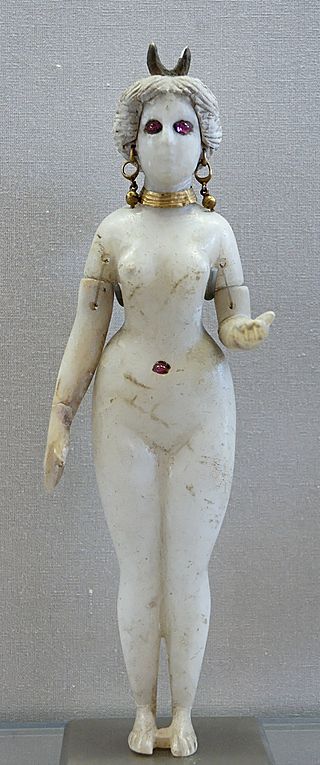
‘Astarte’ the Louvre, Paris (public domain)
For thousands of years it was the Canaanite and then Phoenician cultures that flourished in this tiny sliver of land sandwiched between the Mediterranean and two large mountain ranges. This was the time when Astarte, Queen of Heaven, was worshipped as a goddess of fertility and sexuality, bringing abundance from the sea and nourishment from the land, and ensuring together with her consort Baal, that all things were in balance above and below. She herself was derived from the older Mesopotamian goddess Inanna and it was this archetype that was worshipped throughout the Levant in various forms including Ishtar, Ashtoreth and Aphrodite.
‘Jezebel’ by Byam Shaw, public domain
Today little traces of her remain either physically or in the historical
record, and what does is often recorded through the lens of disapproving
historians or biblical writers. One of her most famous priestesses was Jezebel,
the Phoenician princess and daughter of King Ethbaal of Tyre, who took the
worship of both Astarte and Baal to the kingdom of Israel at the time of the
prophet Elijah. Astarte ruled supreme in all the city states of Phoenica and in
the Eschmoun temple near Sidon (named after her consort in this city), a well-preserved
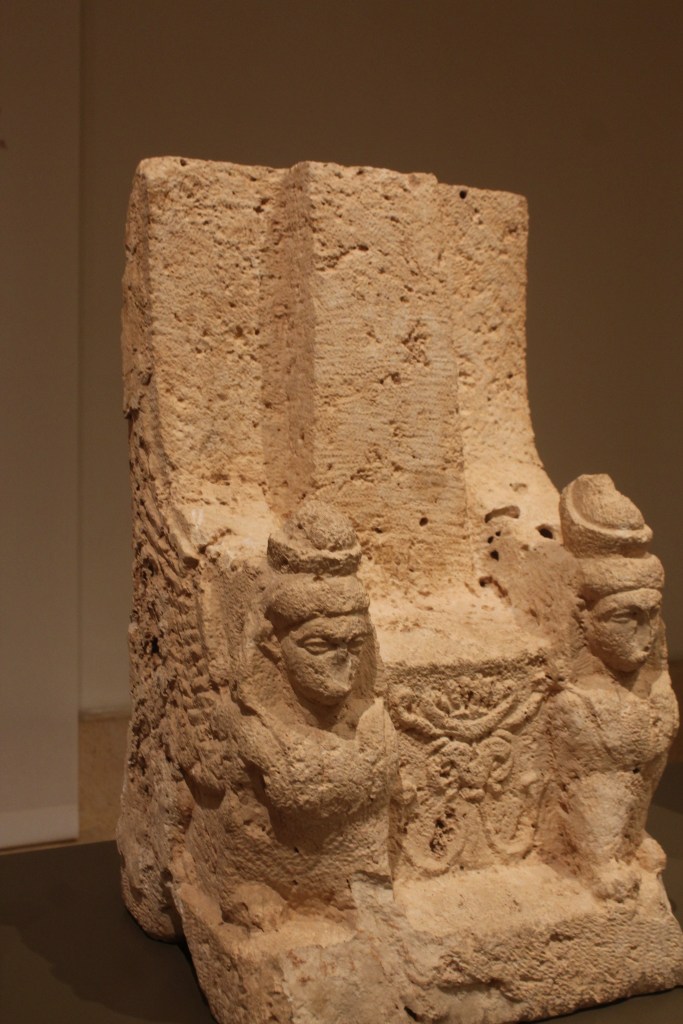
temple still stands to this day. She was typically worshipped in the form as a
throne supported by winged sphinxes or lions, and represented by a betyl, or
sacred stone. It was at Byblos, however, that her main centre of worship was located
and it was there that I went to piece her story together.
Astarte’s throne, National Museum Beirut (author’s photo)
The ancient ruins of Byblos are vast and impressive and in the centre of
the complex, reached by a grand central colonnade, the temple of Astarte once
stood. Reconstructed images show a large open court, surrounded by cloisters,
in the middle of which stood a large conical shaped stone, or betyl, that
represented and embodied her essence. It was here that the famous rites of
Adonis were celebrated, generally seen as the ‘offspring’ of Baal and Astarte,
or sometimes as her lover. The name Adonis means ‘lord’ in semitic and though introduced
at a later stage by the Greeks and Romans, nevertheless embodied a hugely
powerful archetype that also went under the names of Tammuz and Attis.
These young male gods embodied the ‘rising and dying god-man archetype,’ an archaic form of a vegetation deity that has very deep roots. According to James Frazer[1], as harvest gods, they embodied the actual life essence present in the corn and were ritually slain once a year as the corn itself was threshed by scythes and cycles at harvest time. The death of the harvest god was then ritually mourned in a huge ceremony involving cymbals, flutes, and semi-naked women beating their breasts, dancing and weeping in a sacred lament, followed the burial of his wounded body, and then the celebration of his miraculous resurrection the following day.
In the Greek version of the legend, Adonis was born of a myrrh tree (confirming his status as a vegetation deity) and hidden in a box by Aphrodite in the underworld. In a story woven into the mythology of many cultures across the aeons of time, but with local varieties of gods/goddesses playing the part, he is held hostage in the underworld until permitted by an authority figure to spend part of the year above ground, thereby embodying the mysteries of the seed that lies fallow before bursting forth in the spring in the abundant glory of the corn crop.
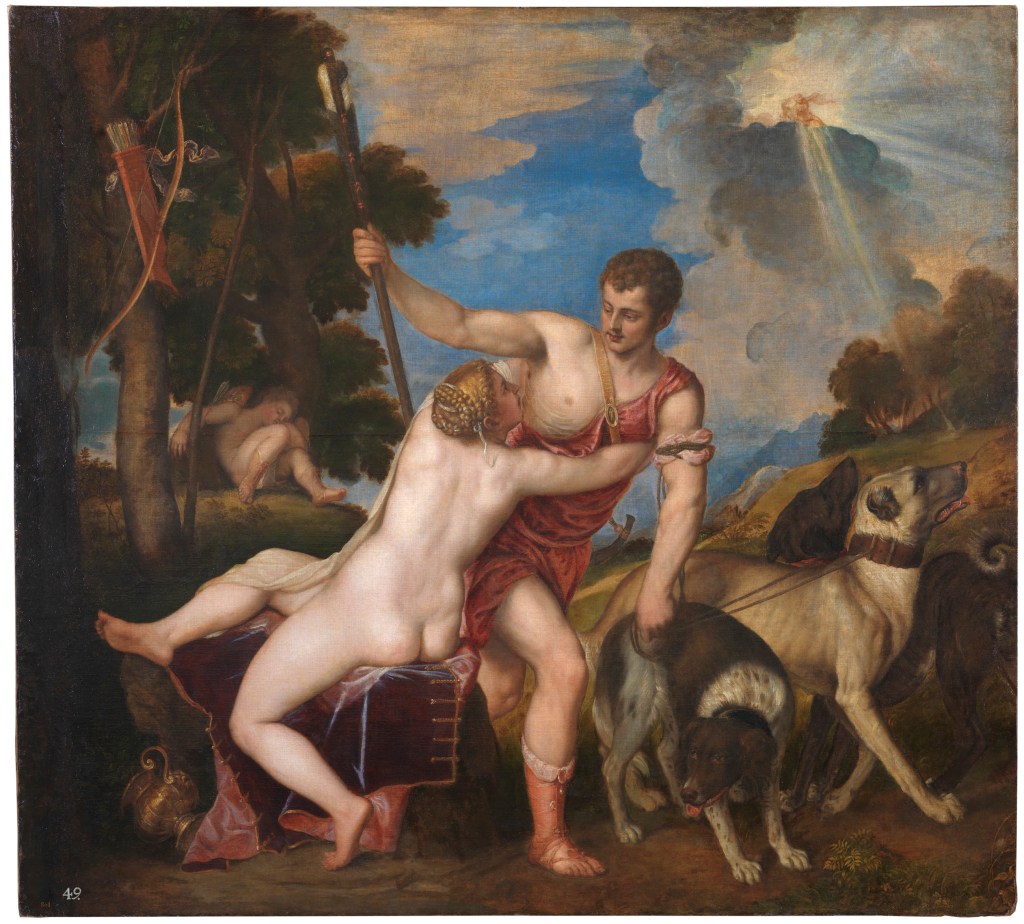
‘Venus and Adonis’ by Titian, public domain
The next part of the legend is specific to the Lebanon, for we are now
told that the youthful Adonis, who loved to hunt, was out on Mount Lebanon near
a place called Afqa. He came across a wild boar, that fatally wounded him in
the leg. Aphrodite herself could not save him from his injuries and he bled to
death on the ground, causing crimson anenomes to spring forth and the river
water to run red with his blood. This river was known as the Adonis river in
antiquity and flowed from Mount Lebanon through the Aphaca gorge down to
Byblos, where it emptied into the sea.
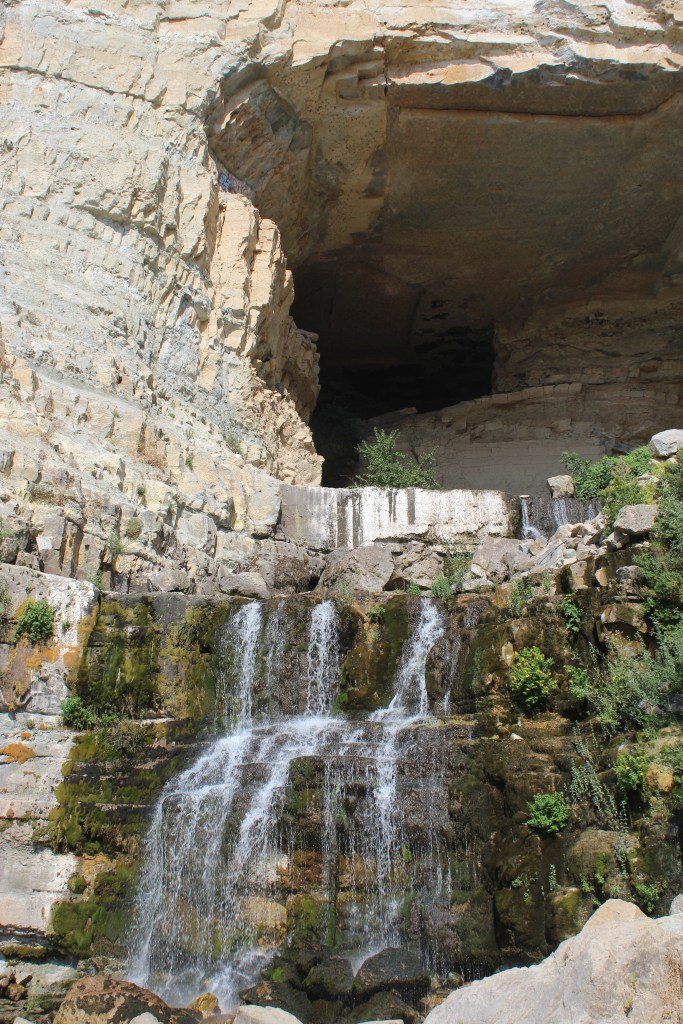
Afqa waterfall, author’s photo
According to Frazer, there was once a large temple of Astarte that stood in a grove near the source of this river, and one hot day in August, I journeyed to Afqa to see what fragments remained. Though I found no trace of the temple, I did find a place of incredible beauty. Set in the towering limestone massif of the Mount Lebanon range was a huge cavern from which a waterfall emerged. Even in August the waterfall was an impressive site forming pools of azure and turquoise water, but in the spring, when the pale sun starts to melt the snow on the top of Mount Lebanon, the frothing waters would have burst forth in torrents, cascading down the valley, fructifying and turning all the vegetation green after the barrenness of winter. It was here, according to the legend, that the wounded body of Adonis was buried, dying so that the vegetation might spring forth.
It is clear from the stories that the blood of Adonis not only fertilised the land but also turned the river red. Upon closer inspection of the waters, traces of iron can be seen and we now know that the soil around the river is rich in iron oxide. As the water levels rise, iron rich soil is washed into the water, turning it the colour of vermillion. This bloody torrent then then snaked down the Aphaca gorge, and on to Byblos where it fanned out to sea, and, in the words of Frazer, “fringing the winding shores of the blue Mediterranean, whenever the wind set inshore, with a sinuous band of crimson.’
Adonis Cavern, Afqa (author’s photo)
And that is not all. As also Frazer suggests, there was a celestial event that accompanied the torrents of water that emerged gushing like blood from the cavern at Afqa, and this could be linked to the planet Venus. According to the historian Sozomen [2] ‘At Aphaca, it was believed that on a certain prayer being uttered on a given day, a fire like a star descended from the top of Lebanon, and sunk into the neighbouring river; this phenomenon they sometimes call Urania, and sometimes Venus.’
Astarte/Aphrodite were closely associated closely with the planet Venus, and the cycles of Venus were well known to the Ancients who considered her retrograde motion then reappearance as the morning star to be mysterious and sacred. It is therefore plausible that at certain times of the Venus cycle, the star was seen from the lofty heights of Mount Lebanon to fall from the night sky and plunge into the river, turning the waters blood red. To the ancients, Astarte would have personified the planet Venus, who fell from heaven to lie in the arms of her lover Adonis, fructifying the barren Earth in a cosmic drama of great potency.
Throne of Astarte at Echmoun Temple, Sidon (author’s photo)
On an even deeper level, it is possible that these rites originally recorded a meteorite impact that occurred in archaic times. Then the falling ‘star’ would have had a physical impact on the Earth, ‘wounding’ it and causing the river to run red with blood. It could also have fructified and brought forth new life, just as the poppies used today to symbolise death and sacrifice rose from the desolate battle fields when they were first ploughed. Furthermore, Astarte herself was represented by a betyl, and the most prized betyl of all were those made from meteorites. They truly were a piece of heaven on Earth and our ancestors understood their significance in a way that has been lost today. In the stories and legends that have come down to us from antiquity, we can therefore piece together traces of a lost world view that saw heaven and earth as a unified whole, and our place in nature as sacred and wondrous.
[1] James
George Frazer ‘The Golden Bough,’ Oxford University Press, 2009.
Of all the sacred sites of Sardinia, the sacred water temples are the most beautiful, and the most unique. They were built by the Bronze Age Nuraghic culture (approx. 1800 – 238 B.C.E.) famed for the numerous Cyclopean towers and huge fortified villages that pepper the island to this day. The primary purpose of these structures was to protect against invasion, but these master builders wove aspects of the existing goddess culture into their fabric, aswell as developing new ones such as the sacred well temples.
It is generally recognised that the Nuraghic culture evolved from the pre-existing Chalcolithic people of the island, but as they were great sea farers and traders, they were certainly influenced by the other Mediterranean cultures of that time. Known as the Tower People, they had something in common with the Mycenaeans of Ancient Greece, who were also building beehive structures containing circular tholos. On Sardinia, the nuraghe, or defensive towers, contain a central tholos, often with side chambers, and circular openings at the top to the heavens. Long passageways within the tholos are often trianglular and feel like a primal birthing canal, designed to take the dead chieftains back to the primal womb of birth/death.
Sacred Well, Perfugus (author’s image)
Though the Nuraghe are numerous, there are only a handful of
surviving sacred water temples and they all contain unique and interesting
features. In Purfugas there is a small but exquisite sacred well made
from marble. Located in the centre of town and surrounded by a fence, entrance
is only possible with a guide from the archaeological museum who provides a key
to gain access.
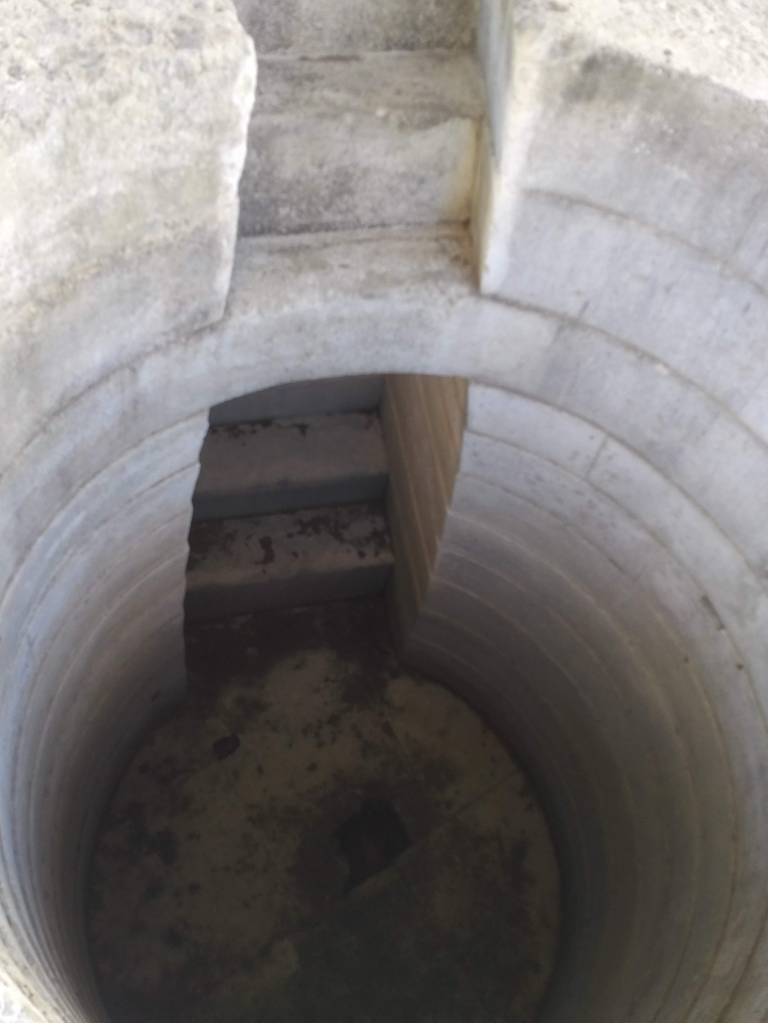
The well is circular and open to the sky now, but reconstructed images show it situated within a stone tholos during Nuraghic times. At the entrance to the structure there is a small rectangular vestibule with seats and a small votive table, both made from marble, where offerings to the water goddess would have been left. A beautiful bronze bull and ox were found at the site, both symbols of fertility and abundance.
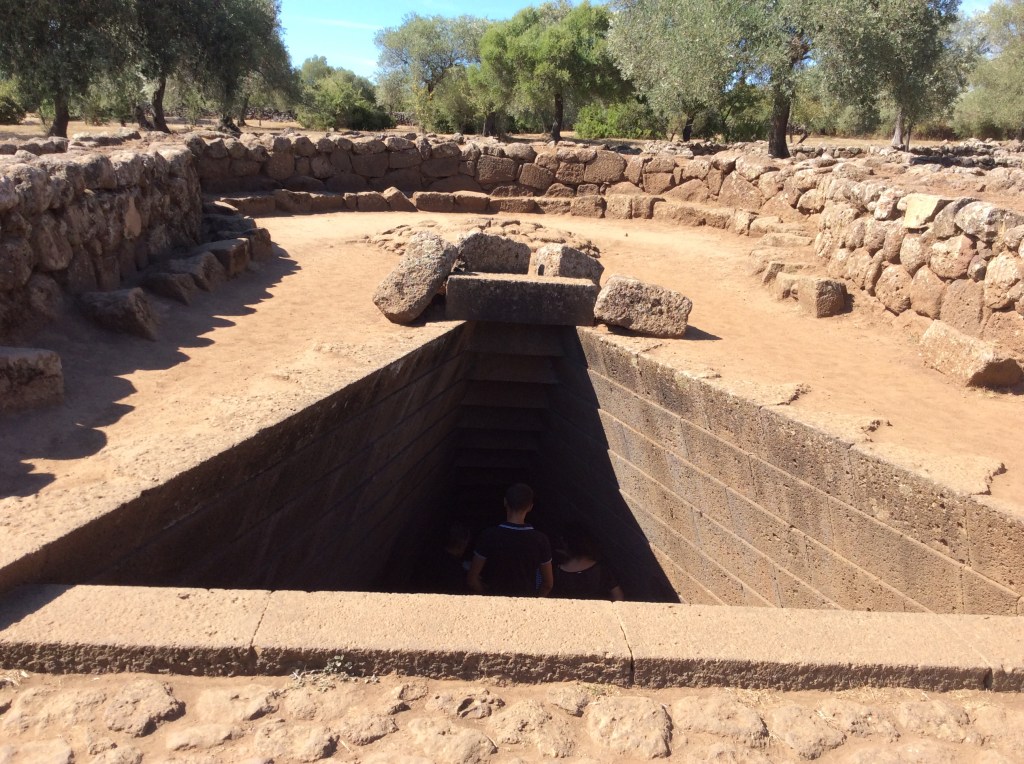
Well floor, Perfugus (author’s photo)
Entrance to the well itself, which is a perfect circle, is via eight skillfully constructed marble steps. Descending into the hypogeum, where once the sacred water rites would have occurred, is like descending into the sacred abyss or underworld from which all life emerges, and the love and devotion once present in this sacred well is still palpable.
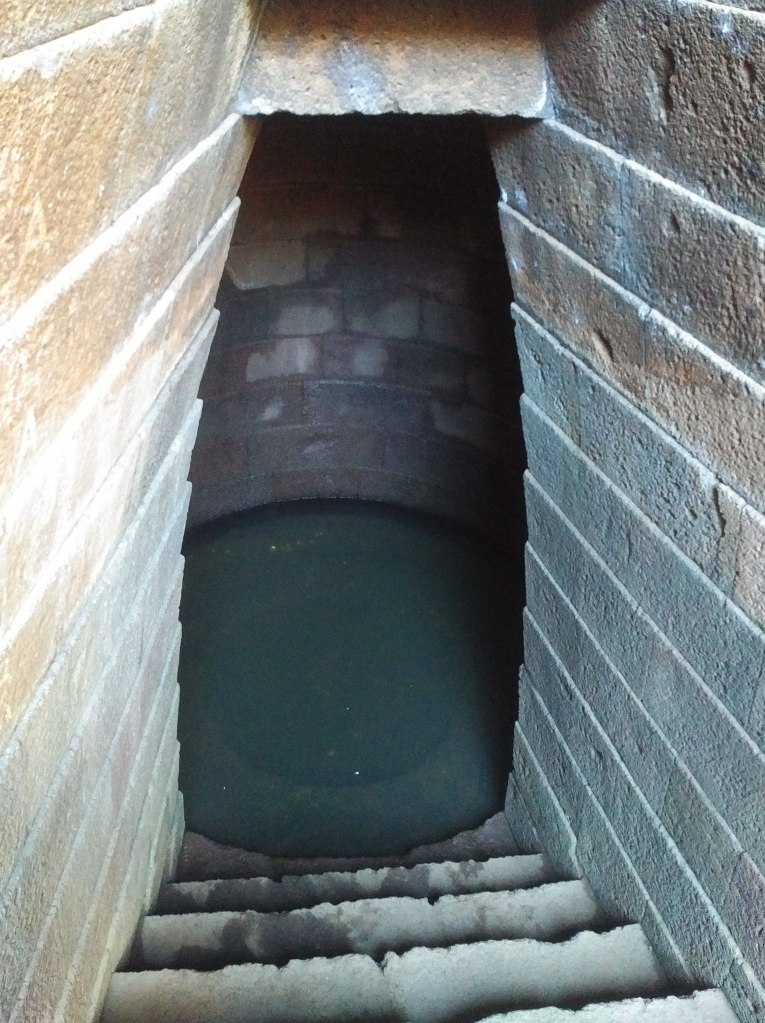
There are other sacred water temples in the south of the island, but it is the well at Santa Cristina near Paulilatino that is the best preserved and most spectacular of them all. Situated right next to a junction on the Sassari to Cagliari motorway, the well is not remote but still capable of transporting you to another realm. It was built in around 1200 B.C.E. and is made from basalt, giving it a more earthy and firey energy than the well at Perfugas. It is surrounded by an elliptical low wall and when seen from above, the structure resembles a vulva with the trapezoid shaped entrance to the well itself resembling the vaginal opening.
Well floor, Santa Cristina (author’s phot)
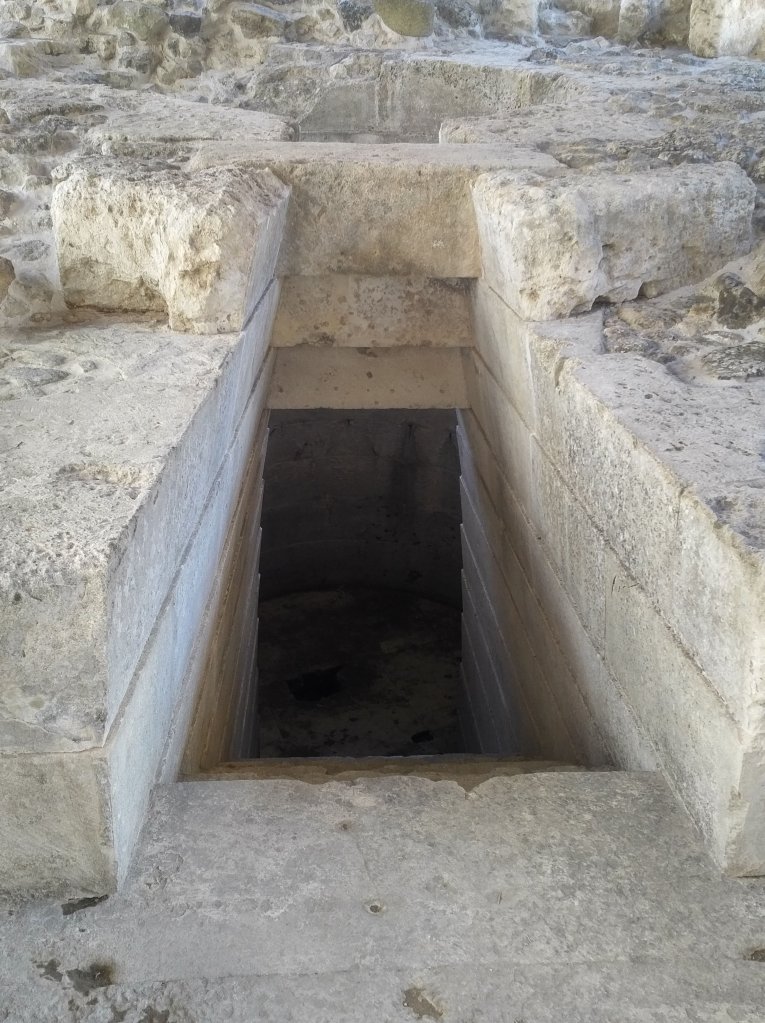
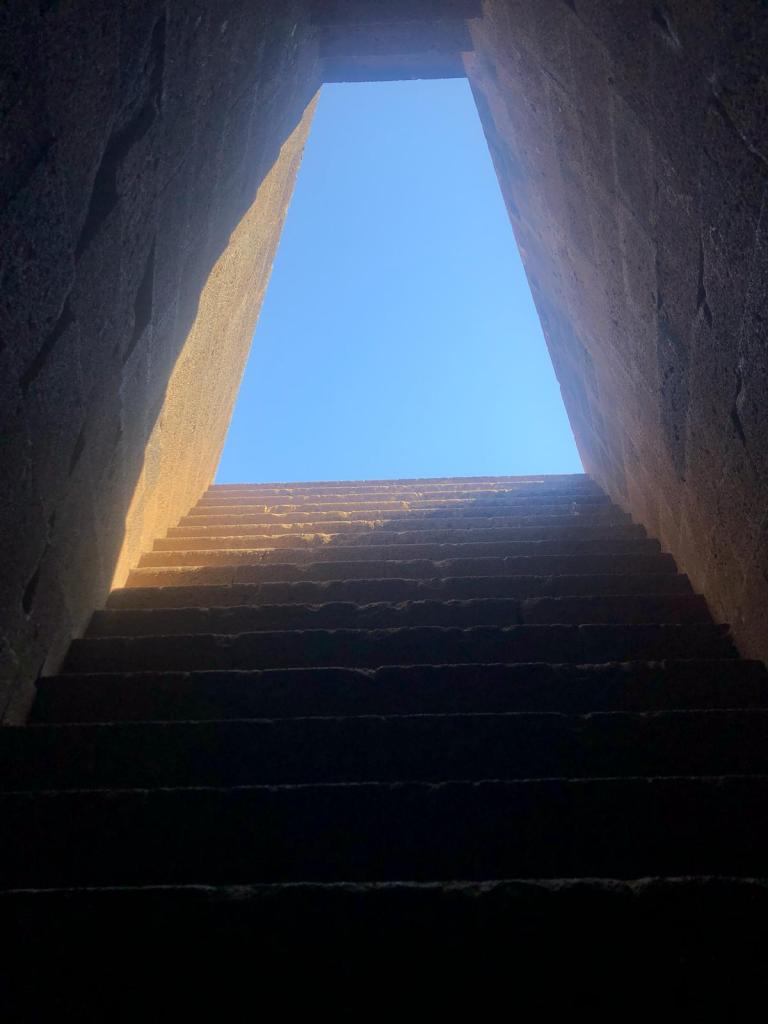
As with the well at Perfugus, the precision and craftsmenship of the structure is exquisite. Access is via a dromos, or vestibule, which leads to a trapezoid opening and twenty five smooth basalt steps lead down to the hypogeum floor. The sacred spring at the heart of the sacred water cult is still active today and laps the bottom few steps, and a large tholos is situated over the well with a carefully positioned hole. Most remarkably of all, some researchers (see http://www.ancient-wisdom.com) have suggested that the hole in the top of the dome is aligned to reflect the light of the setting Moon at its maximum declination every 18.6 years when it appears to reach lunar standstill. This detailed understanding of one of the Moon’s lesser known cycles shows how intimately the sacred water rites were linked to Moon worship, which is, as far as I know, unique amongst the many sacred sites of the Mediterranean.
Trapezoid opening, Santa Cristina (author’s photo)
The sacred water temple iself is part of a larger complex and is surrounded by circular gathering huts which could have been used for ritual purposes, or purely civic activities. Archaeological excavations have shown that the site was used by the Phoenicians in around 1000 B.C.E., as four bronze statues of Phoenician healing gods and goddesses were found during excavations. It is therefore possible that the Phoenician had some sort of influence in the building of this site, especially as the Phoenicians had a strongly defined Moon and sacred water culture that did not appear to be in existence on Sardinia before this time (though this is purely speculation).
This incredible site has been held sacred for over three
thousand years, and still is today. As a pure lunar, womb and sacred water site
it has the remarkable potential for healing on an energetic level some of the
wounding inflicted by the solar warlike Bronze Age energy, as those who descend
into its depths with an open heart can testify.





 Earth Wisdom Earth Science